Tips for Producing Professional Arabic Audio Content
Producing professional Arabic audio content with NourVoice requires careful attention to detail, from selecting the right dialect and crafting clear text to leveraging the platform's features and impl
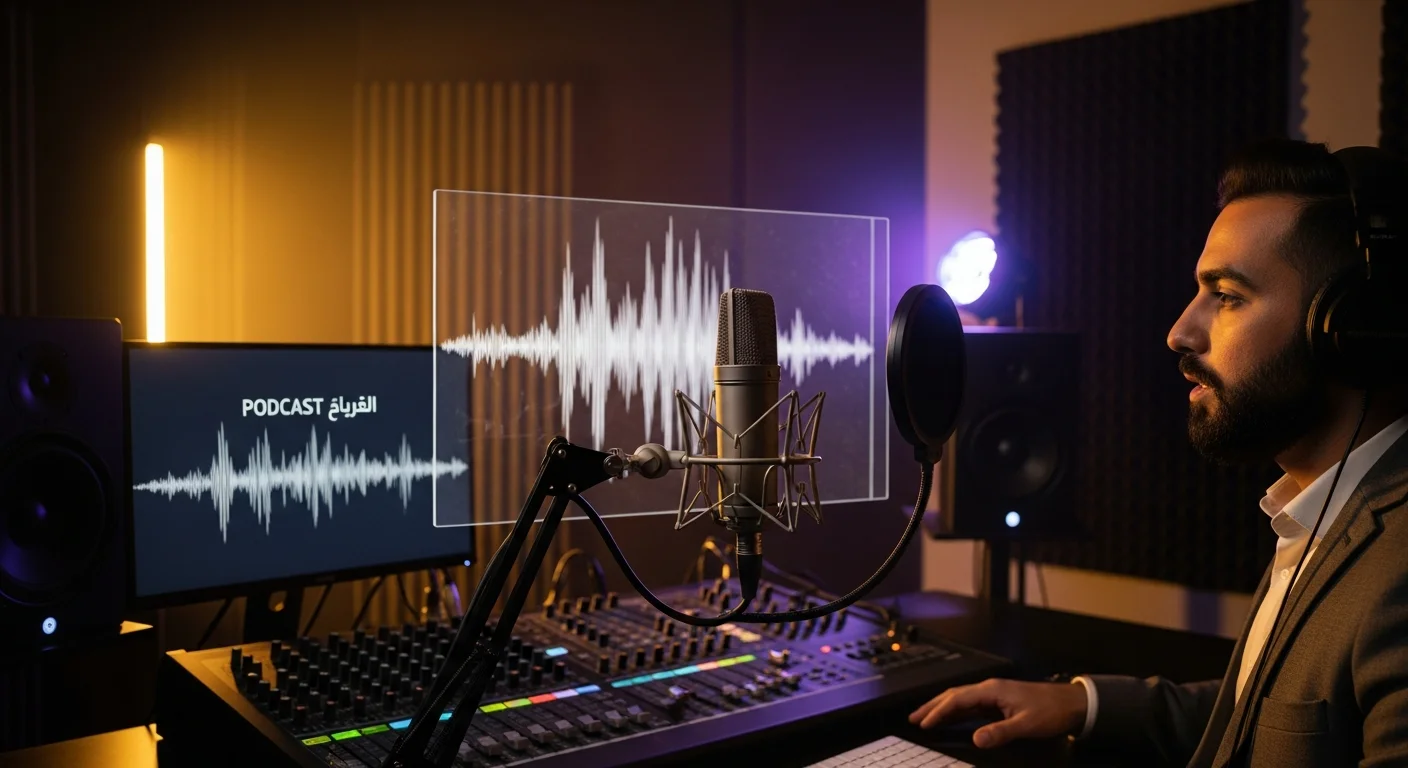
Tips for Producing Professional Arabic Audio Content with NourVoice
The demand for Arabic audio content is rapidly growing, fueled by the increasing accessibility of smartphones, the popularity of podcasts, audiobooks, and e-learning platforms, and a desire for localized content. Whether you're creating educational materials, marketing campaigns, or entertainment content, high-quality audio is essential to capture your audience and effectively convey your message. NourVoice, a leading text-to-speech platform, offers powerful tools for generating Arabic audio. However, simply converting text to speech isn't enough. To truly produce professional Arabic audio, consider these crucial tips:
1. Mastering Arabic Pronunciation and Dialect Considerations:
Arabic is a complex language with numerous dialects, each possessing distinct pronunciations and vocabulary. Choosing the right dialect is paramount. Egyptian Arabic (Masri) is widely understood across the Arab world due to its prevalence in film and television. Modern Standard Arabic (MSA), also known as Fusha, is the formal language used in news broadcasts, official documents, and education.
NourVoice offers a selection of Arabic voices representing various dialects. Carefully select the voice that best suits your target audience and the nature of your content. For example, a children's story might benefit from a friendly Egyptian Arabic voice, while a formal news report would require an MSA voice. Pay attention to vowelization (harakat) when inputting text into NourVoice. Accurate vowelization is crucial for correct pronunciation and clarity, particularly in MSA. NourVoice allows for fine-tuning of pronunciation; utilize this feature to address any nuances or specific vocabulary unique to your chosen dialect. For technical terms or proper nouns, research the correct pronunciation in the relevant dialect and adjust the input text accordingly.
2. Crafting Clear and Concise Arabic Text:
The quality of your audio output is directly dependent on the clarity of your input text. Avoid overly complex sentence structures and ambiguous phrasing. Use clear and concise language that is easy to understand when spoken.
Break down long sentences into shorter, more manageable segments. This improves readability and ensures a smoother, more natural delivery from the NourVoice engine. Proofread your text meticulously for grammatical errors, typos, and punctuation mistakes. Even minor errors can significantly impact the audio's clarity and professionalism. When writing for audio, consider the flow and rhythm of the language. Read your text aloud to identify any awkward phrasing or areas that might require adjustment. Avoid using slang or colloquialisms unless they are appropriate for your target audience and the specific context of your content. If using slang, ensure the NourVoice voice accurately reflects the intended tone.
3. Leveraging NourVoice Features for Enhanced Audio Quality:
NourVoice offers a range of features that allow you to customize and refine your audio output. Take advantage of these features to achieve a professional sound.
Experiment with different voice options to find the one that best suits your content. Adjust the speaking rate and pitch to create a more engaging and dynamic listening experience. Utilize the pause and emphasis controls to add natural pauses and emphasize key words or phrases. This helps to improve clarity and highlight important information. For example, you can add a slight pause before and after a key term or emphasize a call to action. NourVoice allows you to insert breaks and silences. Use these features strategically to create a more natural and conversational flow. Consider adding a short silence between sentences or paragraphs to give the listener time to process the information.
4. Editing and Post-Processing for a Polished Final Product:
Even with a powerful text-to-speech platform like NourVoice, some post-processing is usually necessary to achieve a truly professional sound.
Listen carefully to the generated audio and identify any areas that require further refinement. Use audio editing software to remove any unwanted noises, adjust the volume levels, and add background music or sound effects. Consider adding an intro and outro to your audio content. This can help to create a more polished and professional presentation. For longer audio content, such as audiobooks or e-learning modules, consider breaking the content into smaller chapters or segments. This makes it easier for listeners to navigate and absorb the information. Before publishing your audio content, have it reviewed by a native Arabic speaker. This can help to identify any pronunciation errors or areas where the language could be improved.
5. Optimizing for Accessibility:
Remember to make your audio content accessible to everyone, including individuals with disabilities.
Provide transcripts of your audio content. This allows people who are deaf or hard of hearing to follow along. Ensure that your audio content is compatible with assistive technologies, such as screen readers. When adding background music or sound effects, make sure they do not interfere with the clarity of the spoken word. Adhere to accessibility guidelines, such as WCAG (Web Content Accessibility Guidelines), to ensure your content is inclusive.
By following these tips, you can leverage the power of NourVoice to produce professional Arabic audio content that engages your audience, effectively communicates your message, and enhances your brand.